Website Design for Contractor: How to Build a Website That Dominates Google and AI Search in 2026
Most contractor websites built in the last decade are little more than digital business cards. They look fine, but they don't rank, don't convert, and don't feed the AI platforms that homeowners increasingly rely on. If your contracting business depends on a steady flow of local leads, your website

Most contractor websites built in the last decade are little more than digital business cards. They look fine, but they don't rank, don't convert, and don't feed the AI platforms that homeowners increasingly rely on. If your contracting business depends on a steady flow of local leads, your website needs to work harder than a brochure ever could.
This guide walks you through every layer of building a contractor website that performs in Google Search, Google Maps, and AI-driven platforms like ChatGPT, Perplexity, and Gemini. Whether you're an electrician, HVAC company, roofer, plumber, or general contractor in Florida, you'll find actionable steps to turn your site into your top lead generation tool.
Key Takeaways
A contractor website in 2026 must be built for both Google and AI search (ChatGPT, Perplexity, Gemini) to drive consistent, qualified leads across all discovery channels.
The ideal site has dedicated service pages for each trade (electrical, HVAC, plumbing, roofing, remodeling) and individual location pages for every Florida city or metro you serve, such as Orlando, Tampa, Ocala, and Gainesville.
Google Maps and a fully optimized Google Business Profile are now as critical as the website itself for lead generation and local SEO.
Using schema markup, FAQs, clear headings, and trust signals (licenses, insurance, reviews, original photos) makes your site easier for AI assistants to recommend.
Contractors who invest 12–24 months into structured SEO and content marketing routinely see 3–5 qualified leads per month by Month 12, compounding to 10–20 per month by Month 24.
Why Every Contractor Needs a Website Built for SEO and AI Search
Between 2020 and 2026, the way homeowners find and hire contractors changed dramatically. "Near me" searches, voice queries, and mobile Map Pack results replaced the old habit of flipping through directories or asking a single neighbor for a referral. By early 2026, nearly half of US adults (47%) reported using AI tools for local search in the prior month. Most contracting leads now come from local searches, and contractors who aren't visible in those results are invisible to the market.
Most contractor websites in Florida, built between roughly 2014 and 2019, were designed as online brochures: a hero image, a paragraph about the company's history, and a generic list of services. These sites aren't optimized for local SEO, search engine optimization, or AI Overviews. They don't feed the systems that actually recommend businesses to homeowners today.
Google now blends traditional organic results, Google Maps, and AI Overviews into a single experience. According to the Rio SEO 2026 Local Search Report, phone clicks fell nearly 13% year over year while direction clicks rose over 6%, showing that users who do see a business act on it faster than ever. Your contractor website needs to feed all three systems with clean structure, authoritative content, and locally relevant details. Homeowners compare at least 3–5 contractor websites before making contact, so poor design, outdated photos, or thin content directly reduce inquiries and booked jobs.
Think of your own website as your number one marketing asset. It works 24/7 to educate visitors, pre-qualify leads, and convert them into quote requests without you answering basic questions on the phone.
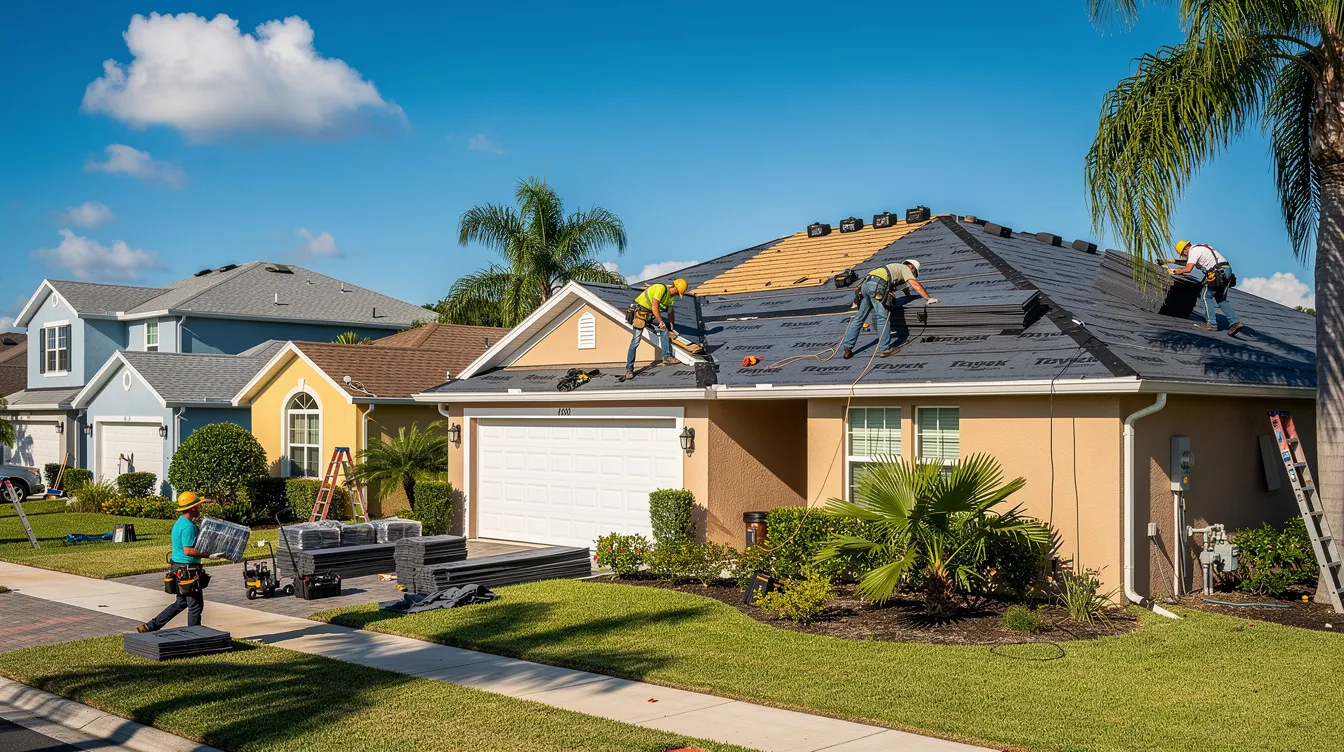
How Homeowners Search for Contractors in 2026
Picture a homeowner in Orlando on a Tuesday afternoon. The AC quit. They pick up their iPhone and say, "Emergency AC repair Orlando near me." What appears: a Google AI Overview summarizing two or three local HVAC companies, the Map Pack with ratings and directions, and maybe two organic results below. The homeowner scans reviews, checks licensing, taps for directions-and never scrolls to page two.
Google Search, Google Maps, and AI assistants like Google Gemini, ChatGPT, Bing Copilot, and Perplexity each play a role in recommending local contractors. But AI platforms are far more selective: a SOCi study found that only about 1% to 11% of business locations are recommended by popular AI assistants, compared to roughly 36% appearing in Google's local pack.
Over 70% of local-intent searches come from mobile devices, and a growing share are voice searches like "licensed electrician near me who can come today." These demand concise, structured answers. If your services, locations, licensing, and pricing aren't clearly presented, AI summaries may omit you entirely. Meanwhile, 76% of local mobile searches result in a store visit within 24 hours, and 28% of local searches result in a purchase within 24 hours. Homeowners skim featured snippets, AI Overviews, and Map Pack results rather than scrolling through page two, so 92% of searchers pick businesses on the first page of local results. Top-tier visibility is no longer optional.
Start with the Right Website Structure
A well-organized website keeps visitors engaged and improves conversions. Think of your site as a "contractor website blueprint" with clearly separated sections:
Homepage - your fast filter and trust builder
Service pages - one for each trade or major offering
Location pages - one for each city or metro you serve
Supporting content hub - blog, FAQs, case studies, project gallery, resources
Contact page - easy access from anywhere on the site
This structure helps both humans and search engines understand what your contracting business does and where. Streamlined navigation aids visitors in finding information easily, and it creates clear topical clusters that AI systems can parse.
Keep the navigation menu simple and shallow: Home, Services, Locations, About, Projects, Blog/Resources, Contact. Avoid stuffing the menu with 15+ items. Each major service and each primary city served in Florida needs its own optimized page for strong local SEO. Include a sitemap and breadcrumb navigation for better crawlability and user experience.
Homepage: Turn Visitors into Qualified Leads
Your homepage is a fast filter. Within five seconds, a visitor should know who you are, what you do, and where you work.
Above the fold, include:
A clear value proposition (e.g., "Licensed Orlando Roofing & Remodeling Since 2010")
Your phone number and a click-to-call button
A "Request Estimate" button
Your service area mentioned in text
Use a hero image or short video of your real team on a Florida jobsite-not stock photos. High-quality visuals on a portfolio can effectively showcase craftsmanship, and real imagery builds trust and local relevance.
Below the fold, add:
Service tiles or cards for Roofing, HVAC, Electrical, Plumbing, Remodeling, each linking to dedicated pages
Trust strip: badges for Florida licenses, insurance, years in business, veteran-owned status if applicable, and your average Google review rating
"How It Works" 3-step process: Schedule Estimate → On-Site Visit → Detailed Proposal, with icons to reduce friction
Service area summary: "Serving Orlando, Winter Park, Kissimmee, and all of Orange & Osceola Counties"
Recent projects, reviews, and FAQ links to keep users on-site longer
Contractors should place contact methods prominently for ease of access on every major page, including the homepage.
Create Dedicated Service Pages for Each Trade
Creating dedicated service pages improves user experience and SEO visibility. A single generic "Services" page cannot compete against a competitor who has individual, keyword-targeted pages for each offering.
Each key service-electrical, HVAC, plumbing, roofing, painting, remodeling, concrete, solar-deserves its own page. For home service companies, think in terms of a website for electricians, HVAC website design, plumbing website design, a website strategy for a roofing company, and remodeling contractor website, each with separate pages and subservices.
Each service page should target specific high-intent keywords like "AC repair Orlando," "panel upgrade Ocala," or "metal roof installation Tampa." Use local, concrete examples-mention real neighborhoods and projects completed in 2025–2026. Detailed service pages improve SEO and clarify offerings for homeowners who are actively searching. Include conversion elements on every page: phone number, quote form, financing mentions, and guarantees. Contractors with optimized websites average 8.5 form submissions monthly, far above the industry norm.
How to Structure Individual Service Pages
Use consistent sectioning across all service pages for better UX and search optimization:
Short intro paragraph stating the service, primary city/region, and client types served
Primary service details with bullet points
Benefits section
Common problems section
Your process, step by step
Why choose us
FAQ block (5–7 questions)
Strong CTA
Each service page should be 800–1,200 words in competitive Florida metro areas. Include a sidebar or in-content "Schedule Service Today" box with phone, form, and emergency-service notice. Add 2–3 internal links to related services and at least one to a relevant blog or FAQ article.
Primary Service Section
Define the specific service clearly-"Electrical Panel Upgrades in Ocala" or "Shingle Roof Replacement in Orlando." Use bullet points summarizing what's included: inspection, materials, labor, permitting, cleanup, and warranty. Reference Florida-specific building codes or permitting processes to reinforce expertise. Embed at least one real project photo with a caption describing city and year (e.g., "Panel upgrade, Ocala – March 2025").
Benefits Section
Explain why the service matters for homeowners in Florida's hot, humid, storm-prone climate. Focus on tangible outcomes:
Lower energy bills
Improved safety and comfort
Code compliance and insurance eligibility
Increased property value
Storm readiness
Use 4–6 bullets focused on results, not jargon. Reference timeframe expectations (e.g., "Most roof replacements completed in 2–3 days, weather permitting").
Common Problems Section
Describe issues homeowners commonly search for: "AC not cooling," "flickering lights," "roof leak after storm," or "low water pressure." List 5–7 symptoms with plain-language explanations and when they indicate an emergency versus a standard service call. Include a short "When to call us immediately" note for safety issues like sparking outlets or gas smells. Describing specific issues improves relevance for long-tail search queries and AI search snippets.
Our Process Section
Outline a clear 4–6 step process from contact to completion:
Call or form submission
Same-day callback
On-site assessment
Written estimate within 24–48 hours
Scheduling and project start
Final walkthrough and cleanup
Reference permitting support for Florida municipalities when relevant. Emphasize communication: text/email updates, appointment reminders, progress photos.
Why Choose Us Section
This is your persuasive sales block. Include years in business, Florida license numbers, insurance coverage, veteran-owned status, manufacturer certifications, and local awards. Highlight response times ("Same-day response for calls before 2 pm in most Orlando ZIP codes"). Reference metrics when available: average review rating, number of projects completed, percentage of repeat clients.
FAQs Section on Service Pages
An FAQ page can help address common client concerns, and each service page should include a concise FAQ block with 5–7 questions marked up with FAQ schema for SEO and AI visibility. Cover pricing ranges, timelines, warranty details, materials used, and whether permits are included. Write answers in 2–4 sentences, addressing the question directly in the first sentence to make them snippet-friendly. Pull from real questions heard on calls and emails during 2024–2026.
Call-to-Action (CTA) Section
End each service page with a strong CTA encouraging visitors to "Request a Free Estimate" or "Schedule Service Today." A clear call to action encourages visitors to engage. Strong calls to action should be placed throughout the website, not just at the bottom.
Include multiple contact options: click-to-call phone number, short form, and business hours for immediate response. Add a small trust element next to the CTA-a review snippet, badge, or "We respond within 2 hours" promise. Reassure visitors there's no obligation and estimates are free, and if you offer recurring marketing or support plans, make the terms clear and cancel anytime.
Build Location Pages for Every City You Serve
Multi-city contractors serving Orlando, Tampa, Daytona Beach, Ocala, and Gainesville need individual location pages-not one generic "Service Area" page. Each location page should feel like a mini-homepage tailored to that city, with localized headlines, copy, and project examples.
Never copy-paste content across city pages with just the city name swapped. Google and AI tools flag thin duplicate content, and it hurts your visibility. Prioritize cities with the highest search volume and job potential first, then expand outward. Include city-specific testimonials and project photos where possible.
What to Include on Each Location Page
City-specific headline (e.g., "Roofing Contractor in Orlando, FL")
Bullet list of services offered in that city
Service area map embedded from Google Maps
Local landmarks and neighborhoods referenced naturally (Lake Nona, Dr. Phillips, Winter Park, Conway)
Local testimonials with names, neighborhoods, and project types
Short FAQ focused on that city's common issues-hurricane damage on the coast, older electrical in historic districts
Avoiding Duplicate Content on Location Pages
Simply swapping city names in otherwise identical text hurts SEO and reduces AI trust in your site. Tailor examples, problem descriptions, and seasonal references to each market's real conditions and housing stock. Customize at least 40–50% of the text per city page. Create a content calendar to build out truly unique pages over several months rather than launching dozens of thin pages at once.
Optimize Your Contractor Website for Google Maps
The local pack and Google Maps rankings often generate more calls than regular organic rankings for contractors. Businesses in the Top 3 Google Maps positions generate 3 times more leads than those ranked lower, and 44% of all clicks for local searches go to the Top 3 Map Pack. Google Maps SEO should be part of your website strategy, not a separate afterthought.
Google Business Profile Essentials
Optimizing your Google Business Profile boosts local visibility and is one of the fastest wins available. A well-optimized Google Business Profile can move businesses into the Top 3 Google Maps positions. Proper GBP optimization can move a business into the Top 3 in 60–90 days when paired with strong website content.
Choose the most accurate primary category ("HVAC contractor," "Roofing contractor," "Electrician"), plus relevant secondary categories
Fill out every field: services, service areas, description, hours, phone, website URL, appointment URL
Upload real project and team photos regularly-fresh images support credibility and local SEO
Post weekly Google Posts with project highlights, seasonal tips, or offers tied to local weather patterns (e.g., hurricane season prep)
Ensure NAP Consistency and Local Citations
NAP (Name, Address, Phone) consistency matters for local SEO and AI trust. Consistent business information across platforms helps enhance local SEO. Prioritize major citation platforms: Google, Apple Maps, Yelp, Angi, HomeAdvisor, Better Business Bureau, and industry-specific directories. Audit existing listings for old addresses, old phone numbers, or inconsistent business names, especially if you moved or rebranded after 2020. Consistent citations reinforce legitimacy and help AI platforms verify your details before recommending you.
Use Reviews and Geo-Tagged Images
Actively collect Google reviews from every satisfied client. Customer positive reviews should be displayed prominently on your contractor's website, as they act as both a ranking and trust signal and can boost sales by 380%. Ask homeowners to mention specific services and cities in reviews (e.g., "roof replacement in Orlando") without forcing scripted language.
Upload photos from job sites with location data when possible (geo-tagged images). A combination of quantity, recency, star rating, and detailed text in reviews improves both conversions and local ranking, while also helping establish website trustworthiness. Industry data shows 92% of top-ranked contractors in local search have a rating of 4.0+ stars.
Build a Website AI Can Understand
AI Overviews now appear in many local search results-by early 2026, they show up in roughly 48% of Google queries. Tools like Google AI Overview, ChatGPT, Perplexity, and Bing Copilot read, summarize, and compare contractor websites for users. Businesses optimized for AI search results gain significant visibility over competitors who ignore this channel.
These systems favor websites with:
Clear page structure and headings
Short, direct answers
Clean HTML without excessive JavaScript
Consistent terminology about services and locations
FAQ blocks and entity relationships
AI tools attempt to identify entities (your business, services, locations) and the relationships between them. Contractor websites can generate 6x more leads than others when properly optimized for both traditional and AI-driven discovery. AI tools can improve lead generation by 6x for contractors who structure content correctly.
Write in straightforward English without excessive jargon so AI can correctly interpret your offerings. Include clear author or business attribution on key pages (About, services, blog posts) to strengthen perceived expertise.
Use Schema Markup on Every Important Page
Schema markup acts as "labels" added to your site's code that help Google and AI understand what each page represents. Embedding schema markup can improve search engine visibility for local businesses. According to Emulent's Local SEO Projections Report, businesses with complete schema see roughly 35% higher click-through rates, yet only about 12–18% of local businesses have full LocalBusiness schema deployed.
Essential schema types for contractors:
| Schema Type | Where to Apply | What It Communicates |
|---|---|---|
| LocalBusiness | Homepage, Contact | Business name, address, phone, geo-coordinates, hours |
| Organization | Homepage | Brand identity, logo, social profiles |
| Service | Service pages | Specific offerings (AC repair, roof replacement, panel upgrades) |
| FAQPage | Service & location pages | Structured Q&A for snippets and AI Overviews |
| Review | Homepage, service pages | Aggregated ratings and testimonials |
| Breadcrumb | All pages | Site hierarchy and navigation |
| Article | Blog posts, guides | Content type and authorship |
Apply LocalBusiness schema to the homepage and contact page with business name, address, phone, geo-coordinates, opening hours, and license info. Use Service schema on individual service pages. Use FAQ schema on every FAQ block so answers can appear directly in Google results and AI Overviews.
Write Content That Demonstrates Real Contractor Expertise
AI and Google now look for evidence of real-world expertise, not generic copy that could describe any contractor in any state. Including customer testimonials enhances social proof for contractors, and a detailed about page can build a personal connection with clients.
Prove your expertise by:
Using original project photos and jobsite stories from 2021–2026
Referencing specific materials, brands, and methods common in Florida (impact-resistant shingles, hurricane straps, high-SEER heat pumps)
Including licensing information, certifications (NATE for HVAC, manufacturer certifications), and safety practices like OSHA compliance
Writing detailed explanations of how you solve problems-this helps AI assistants choose your site as a trustworthy source
A high-quality portfolio gallery displays professional photos of completed projects and anchors your expertise in a way generic stock photos never can.
Create a Supporting Content Hub
A supporting content hub-blog articles, FAQs, case studies, project gallery, resources-captures informational searches and builds authority. Sites with blogs or resource sections consistently outperform "service-pages only" competitors. In one audit of suburban contractors, sites with regular blog content and visual case studies captured the vast majority of organic traffic in their markets.
Publish content monthly that addresses real homeowner questions: "Why is my AC freezing up?" or "How much does a new shingle roof cost in Orlando in 2026?" Organize content by trade (HVAC, electrical, plumbing, roofing, remodeling) and by stage (maintenance tips, cost guides, buyer's guides). This content supports both traditional SEO and AI search by answering specific queries homeowners ask.
Informational, Commercial, and Transactional Search Intent
Your contractor website must serve all three types of search intent:
Informational: "Why does my toilet keep running?" - builds trust and visibility
Commercial: "Best roofer in Orlando" - convinces homeowners to choose you
Transactional: "Schedule AC repair today" - makes it easy to book service
Plan content calendars that deliberately cover all three intents for each core service line. AI-driven marketing strategies can maximize ROI for contractors who address the full spectrum of how customers search.
Build an Internal Linking Strategy
Internal linking connects related pages within your site, helping users and search engines navigate your content. Link from service pages to relevant city pages and from city pages back to main service hubs. Connect blog posts to the service pages they support (e.g., an article on "signs you need a panel upgrade" links to your electrical services page).
Keep anchor text descriptive-"Orlando roofing contractor," "emergency AC repair in Tampa"-to reinforce relevance for search engines and AI.
Optimize Every Image for Speed and SEO
Use original photos rather than stock imagery wherever possible. Descriptive filenames like "orlando-shingle-roof-replacement-2026.jpg" outperform generic strings for search optimization. Alt text should briefly describe the image and include service and city without keyword stuffing.
Compress images and use modern formats like WebP to improve page load speed on mobile. Captions reinforce local context: city, neighborhood, and year of the project.
Make Your Contractor Website Fast
Fast website loading speeds improve user experience and reduce bounce rates. Core Web Vitals and speed directly affect rankings and conversions, especially on mobile in areas with slower connections. Fast load times are crucial for retaining potential clients.
Key actions:
Choose fast, reliable hosting and a lightweight theme
Implement browser caching, code minification, and lazy loading
Target Largest Contentful Paint under 2.5 seconds
Minimize cumulative layout shift
Bloated, generic templates loaded with unnecessary JavaScript are one of the most common performance killers on contractor websites.
Design for Mobile-First Users
A responsive website design is crucial for contractor leads. Mobile-friendly design is essential as many users browse on mobile devices, and contractor websites should be mobile-first for local searches. Over 76% of local mobile searches lead to store visits within 24 hours.
Mobile layout must include:
Sticky click-to-call button
Large, tap-friendly buttons
Readable font sizes (minimum 16px body text)
Minimal pop-ups or distractions
Simplified forms: name, phone, email, ZIP code, brief description
Clear Services menu and fast access to phone number and address
Build Trust Throughout Your Contractor Website
Trust is the primary barrier between a homeowner and a call or form submission, especially for high-ticket projects. Designing a website for a contractor business requires focusing on trust at every level. Websites that prioritize trust and clarity are more likely to generate leads. Trust signals are important for establishing credibility across every page.
Place these elements on every major page:
Google reviews and testimonials
Florida license numbers and insurance details
Years in business
Photos of the owner and key team members
Guarantees (workmanship warranties, satisfaction guarantees) with clear coverage details
Membership badges: local chamber of commerce, trade associations, manufacturer preferred-contractor programs
Create Helpful Resources That Attract and Educate Homeowners
Resource content works well for contractor marketing: cost guides, maintenance checklists, seasonal prep lists, and buyer's guides. Specific examples include:
"2026 Florida Roof Replacement Cost Guide"
"Hurricane Season Home Preparation Checklist for Orlando Homeowners"
"How Much Does an Electrical Panel Upgrade Cost in Ocala?"
These resources build authority and capture visitors through organic search. AI tools often reference detailed guides when summarizing options for homeowners, increasing your visibility without ad spend.
Connect Website Design to Contractor Marketing and Lead Generation
Every web design decision-layout, content, CTAs-should tie directly to marketing goals: increasing form submissions, calls, and booked jobs. Content marketing, local SEO, google ads, and ad campaigns all funnel traffic to your site, where design and messaging convert visitors.
Track key metrics: call volume, form submissions, quote requests, and closed jobs from website leads. Align website messaging with off-site campaigns for consistent branding. BlueGrid Media data shows average cost per lead from SEO is about $35, compared to $90 for Google Ads PPC-and SEO can reduce cost per lead by 61% compared to paid search. Local SEO reduces cost per lead by 61% compared to paid search when executed consistently.
Align Your Website with Local SEO for Contractors
Optimizing for local SEO includes using keywords that describe the services offered. Local SEO optimization helps contractors attract local clients. The overlap between contractor website design and local SEO fundamentals is significant: structured services, clear locations, and optimized Google Business Profiles.
Build city-specific pages and Google Maps optimization into the initial website project, not as an afterthought. Use local keywords naturally in headings, copy, image alt text, and internal links. Regular updates to content, photos, and resources signal ongoing activity to Google and AI platforms, supporting long-term ranking stability.Local SEO for contractors matters because it directly determines whether your business appears when homeowners in your area are actively searching.
Track Performance and Improve Over Time
Basic analytics and tracking are essential for contractor websites:
Google Analytics 4 for traffic and behavior
Google Search Console for keyword rankings and indexing
Call tracking numbers for phone lead attribution
Form tracking for measuring form submissions
Monitor monthly trends in organic search traffic, Google Maps impressions, phone calls, and form submissions tied to different service and location pages. Monthly performance reports keep you informed about how much traffic your site generates and where leads come from. Run simple A/B tests on CTAs, headlines, and hero images. Review results quarterly and adjust content strategy, SEO, and design elements accordingly.
Common Website & SEO Mistakes Contractors Make
Most contractors make at least a few of these errors:
Using a one-page site with no dedicated service or location pages
Relying entirely on stock photography
Thin content (under 200 words) on service pages
Duplicate city pages with only the city name swapped
Ignoring their Google Business Profile
Slow page speed from bloated templates
No schema markup
Missing clear CTAs or contact information
No content strategy or blog
Weak internal linking
Buying cheap, generic templates or "set-and-forget" sites from non-specialist providers-including basic website builders that don't address local SEO-often leads to poor ranking and weak lead generation. Most agencies and most contractors underestimate how much structure and ongoing effort a high-performing site requires. Audit your current site against this guide and prioritize fixes in phases over 6–12 months.
Why Contractors Choose Specialized Local SEO & Website Partners
SEO for Contractors benefit from working with a company that specializes in home services, local SEO, and Google Maps rather than generic web designers. Marketing experts focused on the trades understand contractor lead generation, know what pages convert, and build proven site structures for each trade.
Specialized partners align website design with contractor marketing channels-SEO, ads, email, social, referrals-and can shorten the learning curve. The right partner starts delivering measurable ranking and lead improvements in 60–90 days.
Why contractors choose Local Ranking Coach:
22+ years of real-world SEO experience helping contractors, construction companies, and home service businesses grow
Specialized focus on electricians, HVAC companies, plumbers, roofers, painters, and general contractors
Google Maps optimization to improve visibility in local map results and attract nearby customers
AI SEO and search optimization to structure your site for AI-driven search experiences
Transparent reporting tracking rankings, leads, phone calls, and revenue-focused metrics
Customized strategies built around each contractor's market, services, and goals-no cookie-cutter plans
Ready to Build a Contractor Website That Generates More Leads?
To recap the most important steps:
Define a clear site structure with dedicated service and location pages
Publish authoritative, locally relevant content regularly
Optimize for Google Search, Google Maps, and AI search experiences
Demonstrate expertise and trust through original content, structured data, and customer proof
Track results and refine your strategy every quarter
The expected timeline: foundational setup in 60–90 days, consistent growth in 6–12 months, and compounding SEO results over 24 months. Contractors can expect 3–5 qualified leads per month by Month 12, with momentum building from there.
Your contractor website isn't a digital brochure-it's a sales tool that works 24/7. The contractors who invest in structured, SEO-ready, AI-optimized websites today will dominate their local markets for the next decade. Treat your site as a long-term marketing asset that can outperform ad campaigns alone when properly optimized.
Contact Local Ranking Coach for a contractor website audit or SEO strategy session. Local Ranking CoachWith 22+ years of real-world experience helping contractors increase qualified traffic, improve local visibility, and grow more revenue through sustainable search marketing, we're here to help you get more leads and more jobs from the platform that matters most-your own website. Contact Local Ranking Coach!
Frequently Asked Questions About Contractor Websites and SEO
How long does it take for a new contractor website to start generating leads?
A well-built contractor website with proper local SEO can start generating some leads within 30–60 days, but the strongest, most consistent results typically appear between Months 3–12. Highly competitive Florida metros like Orlando, Tampa, and Miami may require 6–12 months of sustained SEO and content marketing before ranking for top target keywords. Speed depends on domain age, competition, your review profile, and the quality of existing citations and backlinks.
Do I really need separate pages for every service and city?
Yes. Separate pages are strongly recommended for major services and primary cities because they allow targeted local SEO and higher conversion rates. Combining everything on one generic page makes it nearly impossible to rank for specific local searches like "HVAC repair Ocala" or "roof replacement Orlando." Start with your top 3–5 revenue-driving services and 3–5 core cities, then expand. Most clients find this approach delivers more traffic and more qualified leads within a few months of launch.
What budget should I plan for a high-performing contractor website in 2026?
Most serious contractor websites with SEO and Google Maps optimization range from a few thousand dollars for a smaller, single-trade operation to significantly more for multi-location or multi-trade companies. Ongoing monthly SEO, content marketing, and local SEO services are usually required for competitive markets, with budgets aligned to revenue goals and market size. View your website and SEO as an investment that, when executed correctly, can replace or reduce reliance on expensive lead-buying platforms and generate more revenue over time.
Can I build my own contractor website, or should I hire a specialist?
DIY platforms like Wix Studio, Squarespace, and WordPress can work for tech-savvy contractors with time to learn design, SEO, and local optimization. AI website builders can create contractor websites quickly, which is a helpful starting point. However, most growing contractors prefer to focus on running their crews and projects, delegating web design, contractor marketing, and local SEO to experienced specialists. If you choose DIY, follow this guide for site structure, service pages, local SEO, and AI-ready content so your site can compete with competitors who invest in professional optimization.
How often should I update my contractor website content?
Update core pages (services, locations, About, homepage) at least once or twice a year, or whenever services, service areas, or licensing information change. Add new blog articles, project spotlights, or FAQs at least once per month to keep the site fresh and expand keyword coverage. Regular updates send positive freshness signals to Google and AI search tools, supporting long-term visibility and helping potential clients easily find your business when they need you most.