HVAC AEO: How HVAC Contractors Can Win AI Search and Answer Engines in 2026
In 2026, the way homeowners find an HVAC contractor has fundamentally changed. Instead of scrolling through a page of Google results, a growing number of potential customers now receive a single AI-generated answer from platforms like ChatGPT, Google AI Overviews, Gemini, Perplexity, and Bing Copilo

Introduction: HVAC AEO and Why It Matters Now
In 2026, the way homeowners find an HVAC contractor has fundamentally changed. Instead of scrolling through a page of Google results, a growing number of potential customers now receive a single AI-generated answer from platforms like ChatGPT, Google AI Overviews, Gemini, Perplexity, and Bing Copilot. That answer often names one company, not ten.
HVAC AEO, or Answer Engine Optimization, is the practice of getting your HVAC business named directly in those AI-generated answers rather than simply appearing as a blue link buried on page one. HVAC stands for Heating, Ventilation, and Air Conditioning, and the companies that service these systems are now competing for visibility in an entirely new arena. Google AI Overviews appear on up to 47% of searches, which means nearly half the time a homeowner types a question, an AI summary appears before they ever see a traditional result. AI tools often recommend one company instead of multiple links, making that single mention enormously valuable.
This guide is written for hvac contractors, owners, and marketing managers who want more booked ac repair and furnace replacement jobs from ai search. Whether you operate in Ocala, FL, serve Marion County, or cover all of Central Florida, the strategies here apply to any local hvac companies fighting for visibility. HVAC marketing strategies aim to help businesses rank higher in search engines, and AEO is the next evolution of that effort. AI SEO can reduce customer acquisition costs significantly by shifting your lead generation from paid ads to earned AI recommendations.
The contractors who understand this shift now will own the answer box. Those who wait will wonder where their phone calls went.
From SEO to AEO: How AI Search Changed HVAC Marketing
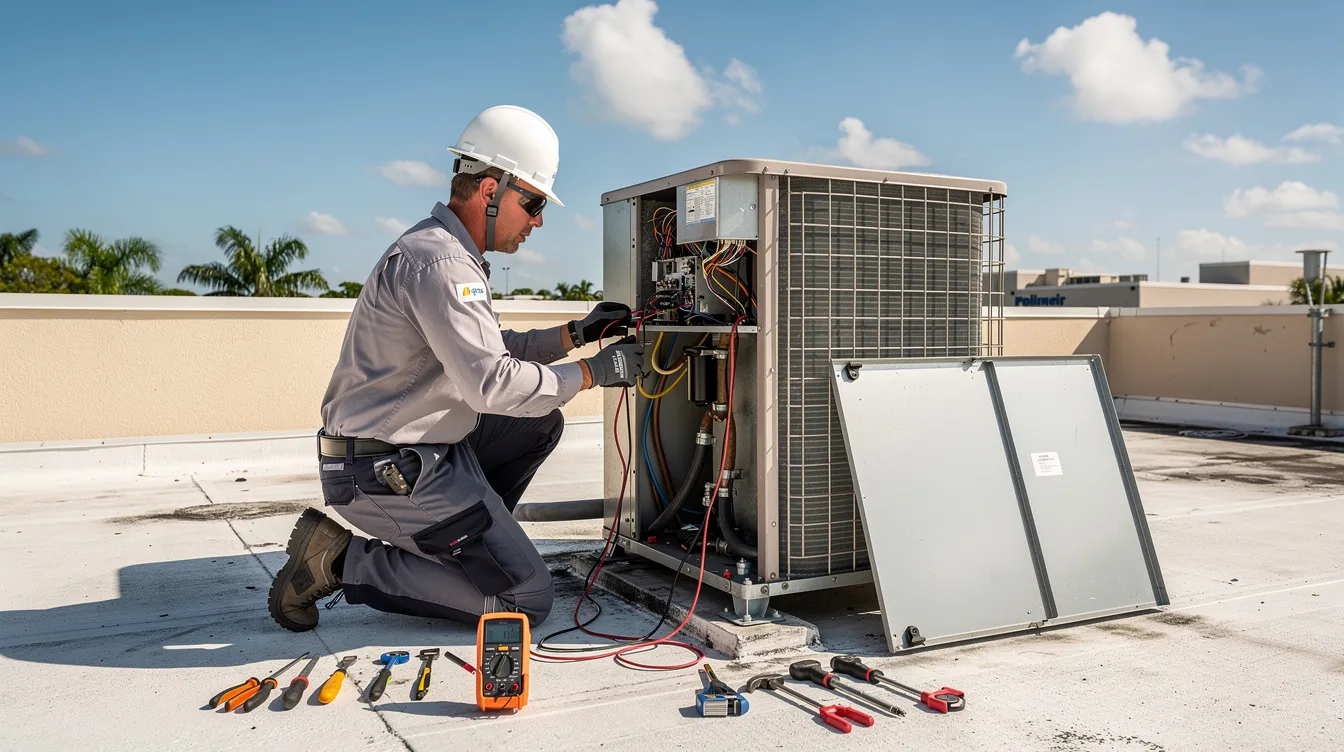
For years, hvac seo meant one thing: get your website into Google's 10 blue links and the local map pack. You optimized pages for keywords like "AC repair Ocala," built quality backlinks, and made sure your site loaded fast. That playbook still matters, but it is no longer enough.
HVAC SEO refers to search engine optimization for HVAC contractors, and it traditionally focused on ranking pages. HVAC AEO, by contrast, is about earning direct mentions and citations inside AI-generated responses. When a homeowner in Belleview asks Gemini "Who should I call for emergency AC repair tonight?", the platform does not return a list of links. It returns a recommendation. AI SEO prioritizes user intent over traditional keyword matching, which means the old approach of stuffing a page with "HVAC repair near me" twelve times no longer moves the needle.
Today, homeowners search using full conversational questions. They speak into their phones or type natural sentences like "What HVAC company is best in Ocala, FL?" and expect a clear, immediate recommendation. Each AI platform, whether it is ChatGPT, Google AI Overviews, Claude, or Bing Copilot, uses overlapping but distinct signals to decide which hvac businesses deserve that recommendation. Understanding these differences is the foundation of any hvac seo strategy built for 2026.
| Factor | Traditional SEO | HVAC AEO |
|---|---|---|
| Goal | Rank pages in search results | Get named in AI-generated answers |
| Primary signal | Keywords and backlinks | Entity trust, structured answers, reviews |
| User experience | User clicks a link, browses site | User receives a direct answer with your company cited |
| Content format | Long-form keyword-optimized pages | Answer-first content with FAQ schema and local context |
| Measurement | Organic ranking position and organic traffic | AI citation frequency and brand mentions across platforms |
Only about 38% of AI Overview citations come from pages ranking in the top-10 organic results. That statistic alone should tell every HVAC business owner that strong traditional seo rankings do not guarantee AI visibility.
Core Ranking Signals for HVAC AEO and AI Search
HVAC AEO still depends on strong search engine optimization fundamentals, but it adds layers that traditional seo never required: entity-level trust, consistent branding across online platforms, and content that directly answers homeowner questions. AI engines reward businesses for quality, relevance, and trustworthiness, and they evaluate those qualities differently than a simple keyword-matching algorithm.
Website Quality and Content Depth. AI systems favor hvac websites with deep topical authority. A site that covers ac repair, heat pump installation, ductless systems, indoor air quality, and maintenance plans with genuine detail will outperform a competitor with five thin landing pages. AI SEO strategies improve lead generation for HVAC businesses precisely because the content earns trust from both the AI and the homeowner who reads it.
Google Business Profile Data. A complete, accurate google business profile is one of the strongest signals for local hvac companies. Businesses with fully completed profiles appear roughly 3.4 times more often in AI Overviews than those with incomplete ones.
Reviews and Reputation. Online reviews significantly impact local HVAC business visibility. Research from Trustpilot found that brands with 80 or more reviews were cited in over 75% of AI-generated answers, while businesses with no review presence appeared in roughly 1%. Reputation management is no longer optional.
Citations and Local Mentions. Being mentioned in local news outlets, industry trade publications, and trusted directories like Yelp and Angi sends entity signals that AI crawlers weigh heavily. These citations act as third-party validation of your business.
Brand Entity Consistency. Consistent NAP information enhances trustworthiness for HVAC companies. Your business name, address, and phone number must match exactly across your google business profile, Yelp, Angi, HomeAdvisor, Facebook, and every niche HVAC directory. Inconsistencies confuse AI systems and weaken your entity profile.
Fair Warning on Gaming Tactics. Keyword stuffing, fake reviews, or spun content are detected by modern ai systems and can reduce your visibility. AI platforms are increasingly sophisticated at identifying suspect signals, and the short-term gain is never worth the long-term penalty.
Google Business Profile and Local Pack: Foundation for HVAC AEO
For hvac companies, optimizing your google business profile is the fastest, highest-leverage move you can make for both Google's Local 3-Pack and google ai overviews. Optimizing Google Business Profile boosts local HVAC search rankings, and it directly feeds the AI systems that generate answer summaries. Local SEO improves visibility for HVAC businesses in search results, and GBP is where that visibility starts.
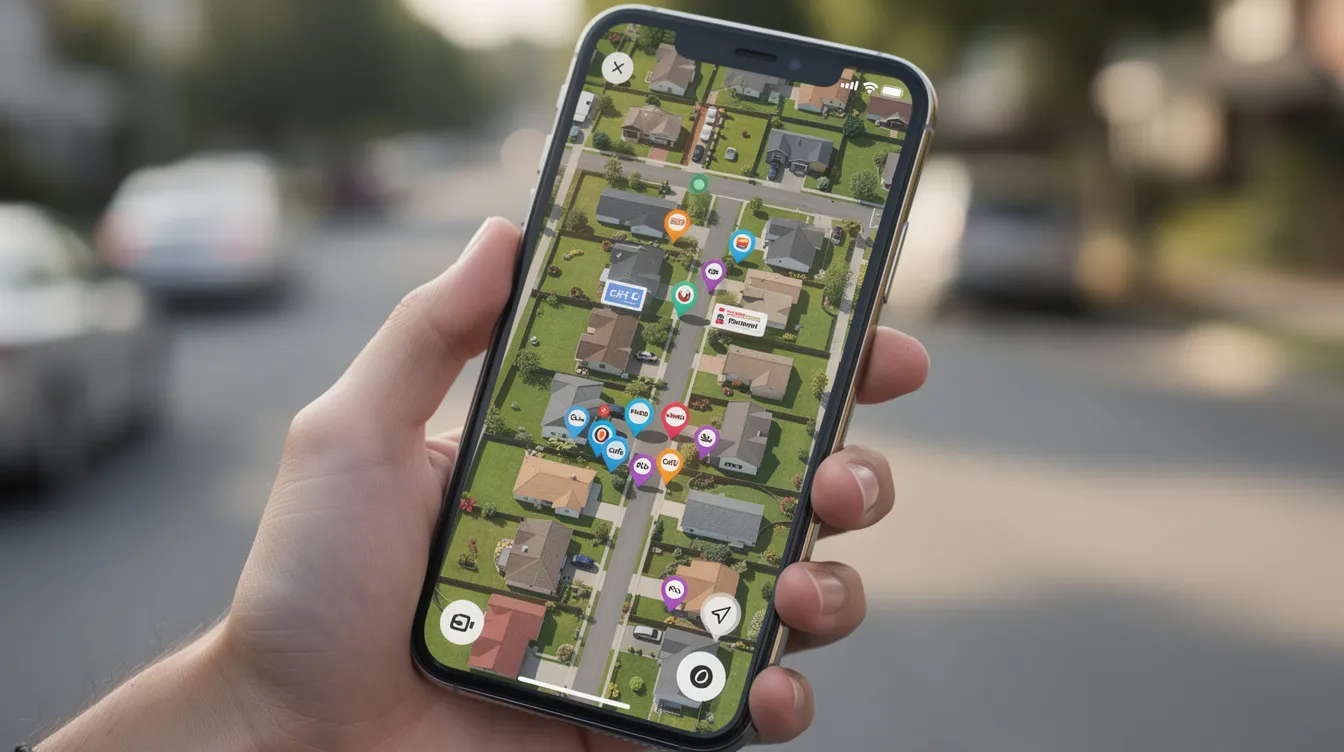
Complete your profile thoroughly. Set your primary category to "HVAC contractor," define your service areas (Ocala, Belleview, Dunnellon, The Villages, Marion County), list every service you provide, keep your hours accurate (especially if you offer 24/7 emergency service), and upload real photos of your technicians, fleet trucks, and completed installations. Google often pulls company names, ratings, and service snippets directly from GBP into AI Overviews for HVAC queries, so what you put in your profile is literally what AI reads aloud to homeowners search for help.
Reviews deserve their own focus. Encourage satisfied clients to leave reviews that mention specific services and locations. A review that says "fast AC repair in Ocala, responded within an hour" gives the AI a clear signal connecting your business to that service and city. Respond to every review, positive and negative. Engagement signals freshness and attentiveness to both Google and the homeowner reading your profile. Local SEO strategies can lead to increased service calls for HVAC when your review strategy is active and consistent.
Keep your GBP alive with ongoing activity. Post weekly updates showing recent installs or helpful tips about seasonal maintenance. Upload photos from jobs completed that week. Answer questions in the Q&A section with clear, useful responses. This ongoing activity signals to AI that your business is active, legitimate, and engaged with customers search for HVAC help.
Consider this scenario: A homeowner in Ocala searches "AC not cooling who should I call." Google AI Overviews scan local providers with complete profiles, strong recent reviews mentioning AC cooling problems, and structured service data. If your GBP has all of that, your company name, rating, and phone number appear in the AI-generated summary. If it does not, a competitor's does.
Building AI-Ready HVAC Content for Answer Engines
HVAC AEO requires content structured so that ai tools can easily extract direct answers to common HVAC questions. AI SEO prioritizes user understanding and helpfulness over keywords, which means your service pages and blog posts need to lead with clear, concise answers before diving into detail. AI-driven content structures improve visibility in answer panels across every major platform.
Service Pages. Create dedicated service pages for each high-intent HVAC service you offer. Pages like "Air Conditioning Repair in Ocala, FL," "Furnace Replacement in Marion County," "Heat Pump Installation," "Indoor Air Quality Services," and "Emergency HVAC Service 24/7" each give AI a clear, specific page to pull from. Air conditioning units cool indoor spaces during warm weather, but your service page should go deeper: explain common failure modes in Florida's humidity, discuss SEER2 efficiency standards, and cover the 2023–2026 refrigerant regulation changes. Heating systems include furnaces, boilers, and heat pumps, and each deserves its own focused page that covers costs, timelines, and local considerations.
FAQ and Resource Hubs. Add robust FAQ sections to your main service pages and city pages. Answer questions like "Why is my AC running but not cooling?" or "How much does a new HVAC system cost in Central Florida in 2026?" with a direct one-to-three sentence answer under a question-based heading, followed by a deeper explanation. This format is exactly what answer engines extract. Ventilation involves exchanging or replacing air to maintain indoor air quality, and a FAQ explaining this to a homeowner builds your topical authority while giving AI a clean answer to serve.
Include local context everywhere. Discuss Ocala's hot, humid summers, the importance of humidity control, and how efficient HVAC systems lower utility bills and reduce operational costs for Central Florida homeowners. Mention that high-efficiency HVAC systems are designed to operate quietly, that energy-efficient units require less maintenance and have higher reliability, and that installing efficient HVAC systems can enhance a building's market value. Modern HVAC systems improve indoor air quality by reducing pollutants and allergens, and covering this in your content demonstrates genuine expertise. Energy-efficient HVAC systems lower carbon footprints and greenhouse gas emissions, a detail that resonates with environmentally conscious homeowners. High-efficiency HVAC equipment can provide financial savings and improve occupant comfort, which is exactly the kind of helpful, specific information AI platforms want to cite.
AFUE stands for Annual Fuel Utilization Efficiency, and explaining metrics like this in your furnace installation content shows the depth that separates your site from competitors running cookie-cutter pages.
Technical AEO: Schema, Site Structure, and Speed
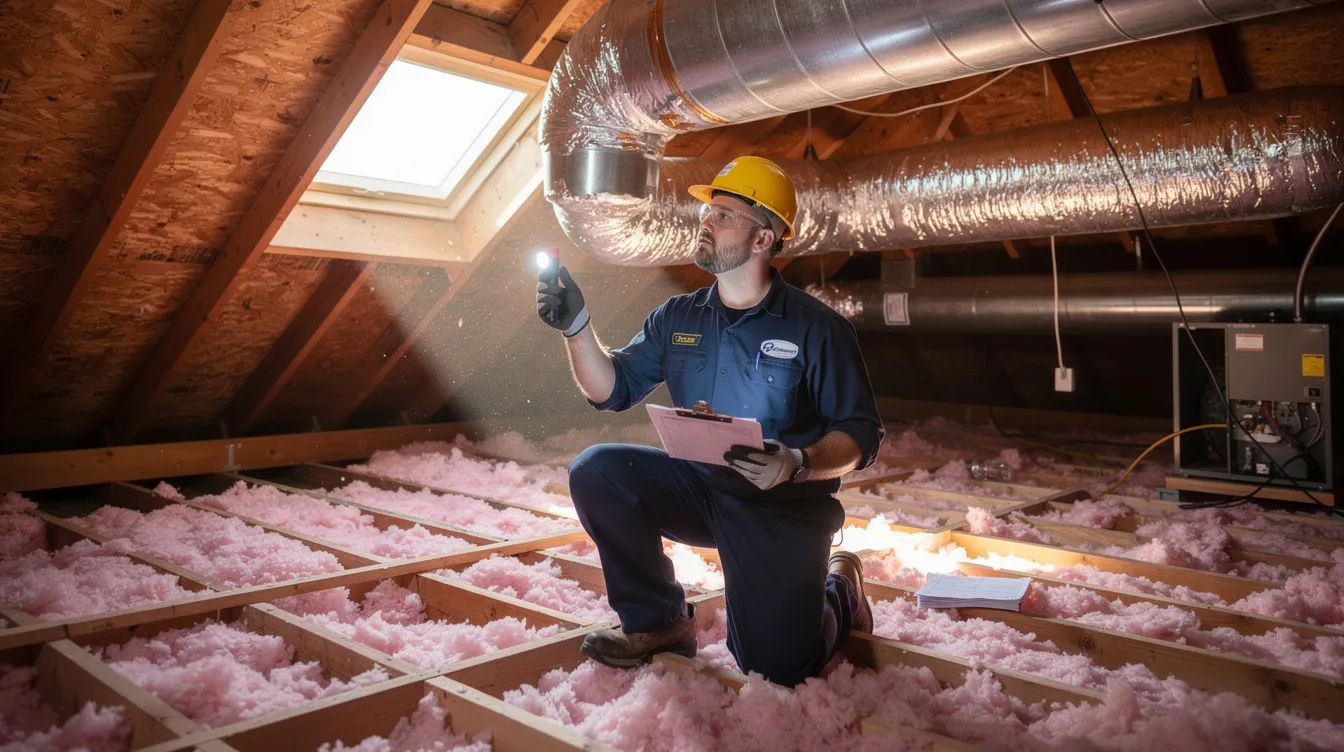
Answer engines rely heavily on structured data and clean site architecture to identify HVAC businesses, their services, and the locations they serve. Structured data markup helps HVAC content appear in AI-driven answers because it gives AI crawlers a machine-readable map of what your pages contain.
Implement the schema types most relevant to hvac providers. LocalBusiness (or the more specific HVACBusiness type) schema should include your business name, address, phone, hours, and service area. Service schema should describe each offering: ac repair, furnace repair, ac installation, furnace installation, furnace maintenance, heat pump installation, and indoor air quality services. FAQPage schema wraps your question-and-answer content so AI can extract it cleanly. Review schema helps surface your ratings and testimonials. All of this should be implemented as JSON-LD in your page headers.
Well-structured URLs reinforce geographic and service associations. Use patterns like /ocala-ac-repair/ or /marion-county-hvac-maintenance/ and build internal links between service pages and city pages so AI can follow the relationships. Your meta descriptions should clearly state the service and location for each page, giving both traditional search engines and AI platforms a concise summary.
Fast, mobile-friendly pages with Core Web Vitals in the green improve crawl efficiency and make it easier for ai systems to process your content. Most homeowners search on mobile devices, and a slow, clunky site will lose both the visitor and the AI citation. Run your site through google search console regularly to identify crawl errors, mobile usability issues, and indexing problems before they cost you visibility.
In the HVAC industry itself, the term AEO also refers to Automatic Energy Optimization, a feature in HVAC systems that saves energy. Adaptive Energy Optimization reduces power consumption by adjusting system output based on real-time conditions. AEO adjusts voltage to optimize energy consumption during partial loads, and variable frequency drives control blower motor speeds in HVAC systems to achieve this. AEO can result in a 3 to 5% power reduction in motors beyond standard operations. AEO predicts temperature patterns and occupancy rates to manage peak demand, and AEO ensures motors only draw power needed for effective fan operation. Writing about these technical HVAC topics on your website demonstrates the kind of deep industry knowledge that AI platforms trust and cite.
Local Topical Authority: Owning HVAC Topics in Your Service Area
Topical authority means becoming the most complete, trusted source on HVAC topics within your defined service area. For an HVAC contractor in Ocala, that means owning every relevant subtopic, from seasonal maintenance and troubleshooting to energy efficiency and system comparisons, in a way that no competitor matches.
Build a content plan that covers maintenance guides, troubleshooting articles, seasonal prep checklists for both cooling and heating seasons, energy efficiency recommendations, and comparison content like "Heat Pump vs. Traditional Split System for Florida Homes." High-intent leads are generated through localized targeting and query intent modeling, which means each piece of content should tie a specific HVAC problem to a specific geography and a clear next step.
Create dedicated service area pages for each major community you serve. "Ocala HVAC Services," "Belleview HVAC Services," "Dunnellon AC Repair," "The Villages HVAC Contractor," and "Marion County HVAC Maintenance Plans" each give AI a location-specific page to reference. These pages should not be thin duplicates with only the city name swapped. Each should include local details: neighborhood characteristics, common home types, typical system sizes, and relevant municipal permitting information.
Link these city pages to your core service pages with contextual internal links. When your Dunnellon page links to your ac repair service page and vice versa, AI tools can trace the relationship between your expertise and the geography you serve. AI search systems reward hvac businesses that demonstrate long-term expertise across multiple subtopics. A handful of thin landing pages will not compete with a comprehensive strategy that covers the full breadth of HVAC knowledge for your area.
E-E-A-T for HVAC Contractors in AI Search
Google's E-E-A-T framework, Experience, Expertise, Authoritativeness, and Trustworthiness, has become a core evaluation lens for AI search. AI SEO requires a comprehensive digital presence for trust signals, and E-E-A-T is how those signals are measured.
Experience. Show that your team has hands-on experience with real HVAC projects. Publish project spotlights with before-and-after photos from recent installs in 2024–2026. Include details: what system was replaced, why the homeowner needed an upgrade, and what the outcome was. These are the kind of real-world signals that separate local contractors from faceless national directories.
Expertise. Feature technician bios with certifications like NATE and EPA 608. List years in business. Explain specialized skills, whether it is commercial HVAC repair, ductless mini-split installation, or indoor air quality diagnostics. Your content should reflect expertise that only comes from doing the work, not from copying a competitor's website.
Authoritativeness. Get mentioned beyond your own website. Local news coverage, partnerships with builders or HOAs, sponsorships of community events, and guest contributions to industry publications all build authority. Cooling companies that exist only on their own domain without external validation are harder for AI to trust.
Trustworthiness. Display your licensing numbers, insurance details, warranties, and transparent pricing ranges on your site. Respond to all online reviews. Make your contact information prominent and consistent. These trust-building elements are what large language models weigh when deciding which hvac providers to recommend by name.
AI Search, Voice Search, and "Near Me" Queries for HVAC
The way customers search for HVAC help is increasingly conversational. Voice search through phones, smart speakers, and in-car systems now handles queries like "emergency AC repair near me tonight" or "who can fix my furnace in Ocala right now." AI SEO captures emergency service calls 24/7 for HVAC contractors who have optimized for these urgent, location-specific queries.
Optimize for this behavior by writing natural-language FAQs with explicit location mentions, clearly stating your 24/7 availability (if applicable), and defining your service area coverage for each city and ZIP code you serve. Your site should answer the question a homeowner would speak aloud, not just the keyword a marketer would type. Hiring a company like Local Ranking Coach to assist you with your HVAC SEO services is a great start!
Add conversion elements that match urgent intent: click-to-call buttons, tap-to-text options, and simple mobile booking forms for same-day appointments. When someone asks their phone for help at 2 AM because their air conditioning just died, the path from AI answer to booked service call needs to be frictionless.
Keep your business hours, service radius, and contact information updated across every platform: google business profile, Apple Maps, Bing Places, and Yelp. AI tools pull from multiple data sources, and inconsistencies anywhere in that ecosystem can knock you out of the answer entirely.

Tracking HVAC AEO Performance Across AI Platforms
Unlike traditional seo rankings, AI citations are fluid. Your company might appear in a ChatGPT recommendation today and be absent tomorrow if a competitor publishes stronger content or earns more reviews. Tracking requires a different approach than watching a rank tracker dashboard.
Start by manually testing key HVAC queries on a monthly basis. Search "best AC repair in Ocala," "who should I call for furnace replacement near me," and "emergency HVAC service Marion County" in ChatGPT, Google AI Overviews, Gemini, Perplexity, and Bing Copilot. Log whether your company is named, how it is described, and which competitors appear instead. This manual audit takes 30 minutes per month and provides insight no automated tool fully captures yet. Transparent reporting of these findings should be part of any seo company engagement or internal marketing review.
Combine this with data from google search console to track impressions, clicks, and which queries are driving more organic traffic to your hvac websites. Layer in call tracking from tools like CallRail and CRM data to connect content changes and AEO improvements to actual hvac clients, booked jobs, and revenue. The goal is to measure not just local visibility, but the qualified leads and phone calls that result from being the company AI recommends. An account manager overseeing your digital marketing should review these metrics monthly and adjust the strategy accordingly.
Putting It All Together: HVAC AEO Roadmap for the Next 90 Days
Here is a practical 90-day action plan for hvac business owners ready to boost visibility across both traditional search results and AI platforms.
Weeks 1–4: Foundation. Audit and complete your google business profile. Verify that your NAP is consistent across every directory and platform. Run a technical seo audit: fix crawl errors, improve page speed, ensure mobile responsiveness, and install structured data markup on your key pages. Identify your highest-value hvac services (ac repair, ac installation, heat pump installation, emergency HVAC) and prioritize them for content improvements.
Weeks 5–8: Content Build. Create or overhaul service pages for each priority service, structured with answer-first formatting and robust FAQ sections. Build or improve service area pages for Ocala, Belleview, Dunnellon, The Villages, and Marion County. Add FAQPage, LocalBusiness, Service, and Review schema to every relevant page. Publish two to three blog posts covering seasonal HVAC topics relevant to your market. Align keywords to match the conversational queries homeowners actually use.
Weeks 9–12: Authority and Measurement. Launch a review solicitation process to generate fresh, location-specific reviews from satisfied clients. Pursue local press mentions, directory listings, and community partnerships. Begin monthly AI citation checks across all major platforms. Monitor call volume, website inquiries, and lead generation metrics to measure early impact. AI SEO reduces customer acquisition costs by building inbound funnels, and this is when you will start to see that funnel take shape.
Most hvac companies see early movement in 60–90 days, with stronger AI visibility building over 6–12 months. HVAC AEO is not a replacement for SEO but a layer on top that ensures your business is the one AI tools recommend by name. The home service companies and local providers that invest in this comprehensive strategy now will capture more business, generate more organic traffic, and reduce their dependence on paid ads and local service ads.
The shift is happening whether you act or not. The only question is whether your HVAC company is the one AI names when a homeowner asks for help, or whether it is your competitor down the road. Start your audit today.
Frequently Asked Questions About HVAC AEO and AI SEO
What is HVAC AEO and how is it different from SEO?
HVAC AEO is the practice of optimizing your HVAC business so that AI-powered answer engines like ChatGPT, Google AI Overviews, and Perplexity name your company directly in their responses. Traditional SEO focuses on ranking your website in search engine results pages. AEO adds entity trust, structured data, reviews, and answer-first content formatting so AI platforms can extract and recommend your business. Both work together, and generative engine optimization is the broader term some use for this same concept.
How can my HVAC company get mentioned in ChatGPT and Google AI Overviews?
Build a complete google business profile, earn consistent online reviews that mention your services and location, create answer-first content on your hvac websites, implement structured data markup, and ensure your NAP is consistent everywhere. AI systems pull from multiple sources to build their recommendations, so your digital marketing presence needs to be strong across the entire web, not just your own site.
Does optimizing my Google Business Profile help with AI search?
Yes. Businesses with complete GBP profiles appear roughly 3.4 times more often in AI Overviews than those with incomplete profiles. Your GBP feeds data directly into Google's AI summaries, making it one of the single most impactful actions for hvac ai seo and local search results alike.
How long does HVAC AI SEO usually take to show results?
Most hvac businesses see early movement within 60 to 90 days after implementing GBP fixes, schema markup, and content restructuring. Stronger, more consistent AI visibility typically builds over 6 to 12 months as your topical authority, review volume, and entity signals compound. About 49% of AI Overview citations come from domains older than 15 years, so newer businesses need to work harder on trust signals, but small local contractors absolutely can and do compete.
Can small HVAC businesses compete with big brands in AI search?
Yes. AI search results for local queries heavily favor local signals: reviews from local homeowners, service area relevance, and local content depth. A small HVAC company with a strong GBP, 80-plus recent reviews, and detailed local content can outperform a national brand that lacks local specificity. The key is building trust as a trusted partner in your specific community.
Do I need separate content for each city I serve for AEO?
Yes. AI platforms often cite businesses with strong local signals tied to specific geographies. Creating unique service area pages for each city, such as Ocala, Belleview, Dunnellon, and The Villages, helps AI associate your expertise with each location. These pages should not be duplicates with only the city name changed; each should include locally relevant details about housing types, climate considerations, and community-specific HVAC needs.
What HVAC keywords do AI platforms commonly reference?
AI platforms commonly generate answers for queries around ac repair, emergency HVAC service, AC replacement, furnace repair, furnace installation, indoor air quality services, HVAC maintenance plans, and heat pump installation. Search optimization for these terms, combined with local modifiers and conversational phrasing, positions your business to appear in ai generated summaries and ai summaries across multiple platforms. The seo strategies that work best combine these high-intent keywords with direct answers and local proof points from real hvac clients.