Google Business Profile Not Showing Up? Why It Happens & How to Fix It
Most "not showing up" issues trace back to incomplete setup, verification delays, policy violations, or weak local SEO signals - not Google arbitrarily hiding your listing.

Key Takeaways
Most "not showing up" issues trace back to incomplete setup, verification delays, policy violations, or weak local SEO signals - not Google arbitrarily hiding your listing.
Google uses three core local ranking factors to decide Map Pack visibility: relevance (how well your profile matches the search), distance (proximity to the searcher), and prominence (reviews, citations, authority, and user engagement).
Your primary category is the #1 ranking factor for Google Maps, and businesses with complete profiles rank higher in local searches than those with missing information.
A well-optimized google business profile combined with a locally optimized website, consistent citations, and steady review growth usually restores visibility within 30–90 days.
Local Ranking Coach is a veteran-owned local SEO company that specializes in diagnosing and fixing "not showing up" problems for local businesses nationwide, using a combination of semantic SEO, AEO, and GEO strategies.
If your google business profile not showing up is costing you phone calls, walk-ins, and revenue, you are far from alone. Google Business Profiles are affected by visibility problems and ranking issues more often than most small business owners realize. And the consequences are real: 86% of consumers use Google Maps to look up a business, and 90% of consumers use Google Maps for local searches. If you are invisible there, you are invisible to the majority of your potential customers.
The good news? Nearly every visibility problem has a specific cause and a concrete fix. This guide walks you through fast diagnostic checks, explains exactly how Google decides which businesses earn a spot in the local pack, breaks down 15 reasons your listing might be missing, and shows you how Local Ranking Coach restores Map Pack visibility for local businesses across the country.
Why Your Google Business Profile Is Not Showing Up (Fast Checks First)
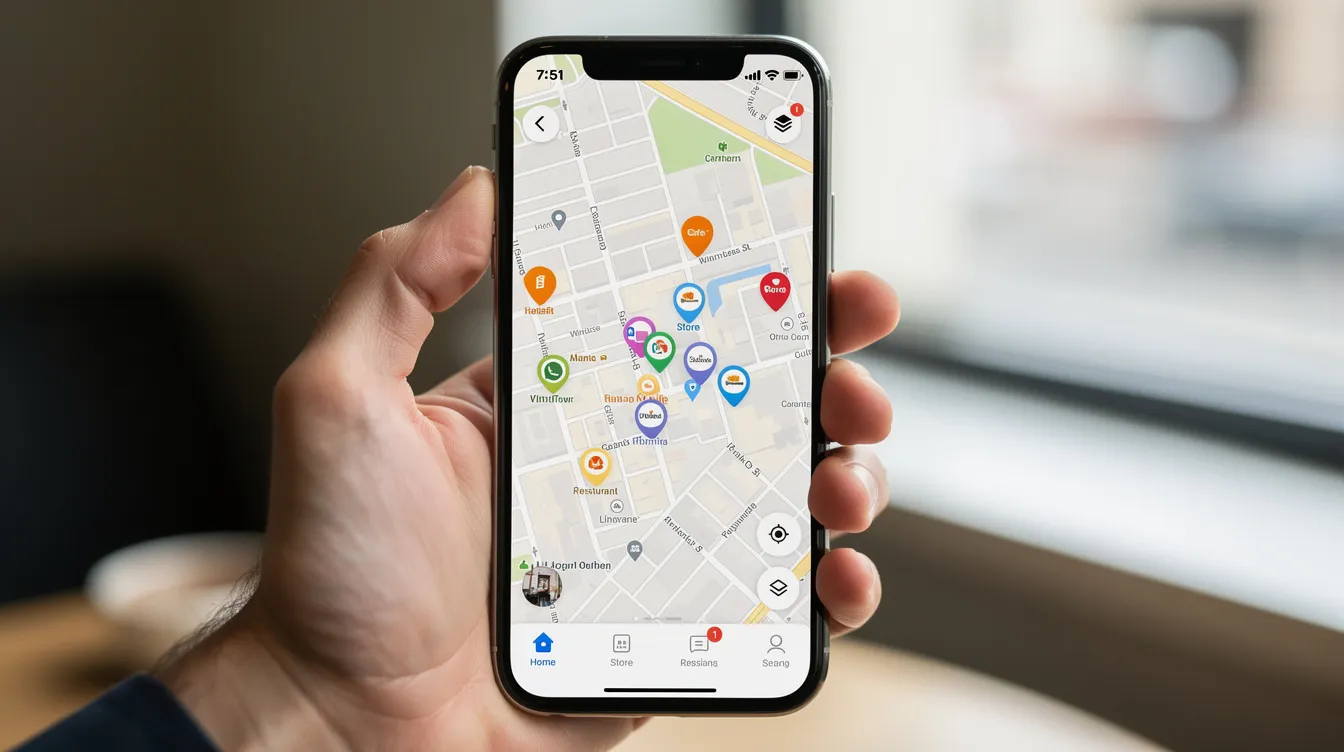
Before diving into deep local seo strategies or rebuilding your website, run through these quick diagnostic checks. "Not showing up" can mean several different things: your business profile might not exist at all, it might exist but not appear in google maps, it might show up in a "View all" expanded list but never in the top three Map Pack results, or it might only appear when someone searches your exact business name. Each scenario points to a different problem.
This section covers the fastest checks. If all of them come back clean and your listing still doesn't show for obvious local searches, the issue is deeper - and the sections below will cover it.
Confirm the profile actually exists and is publicly visible. Search your exact business name plus city in google search and google maps on both desktop and mobile devices while logged out. Google often requires exact business name and city for search visibility, so use that combination first. Then log into Google Business Profile Manager and check the listing status. If the dashboard says "Live" but you still can't find it publicly, personalization or proximity may be masking your results.
Check your verification status. An unverified profile is essentially invisible for non-brand local searches. If you created a listing but never completed verification by postcard, phone, email, or video, the profile will be suppressed from search results and google maps. Claiming your Google Business Profile takes 5–14 days via postcard in 2026, and video verification can be faster (3–5 days) in some regions. If you entered a verification code but the status still says "processing" after five or more business days, contact Google support - there may be a manual review backlog.
Look for suspension or "Disabled" status. Suspended profiles will not appear in search results - period. Common triggers include keyword-stuffed business names, using a virtual office or P.O. box without permanent staffing, repeated rapid edits to your name or categories, and other policy violations outlined by Google. If your listing is suspended, you will need to file a reinstatement request with supporting evidence such as utility bills, business licenses, and photos of signage.
Review your physical address and service area settings. If you are a service-area business (SAB) with a hidden address, you may rank weakly or not appear for broader city searches. Storefronts with a visible, verified physical address tend to have an easier time appearing in the local pack. If your address is incorrect, or if your service area spans an unrealistically large region (multiple states, for example), Google may flag or suppress the listing.
Check NAP consistency across the web. If your business name, address, or phone number is different on your google business profile than it is on Yelp, Apple Maps, Bing Places, Facebook, or your own website, Google can lose confidence in your business information and suppress your listing. Even minor differences - "St" vs. "Street," a missing suite number, or an old phone number on one directory - can erode trust.
Understand the "new trust" phase. New or recently edited Google Business Profiles may take weeks to establish visibility. A freshly verified listing in 2026 typically needs 2–8 weeks of activity - uploading photos, publishing google posts, collecting the first few online reviews - before it starts ranking for non-brand "discovery" queries. Patience during this phase is critical, but passivity is not; active engagement shortens the timeline.
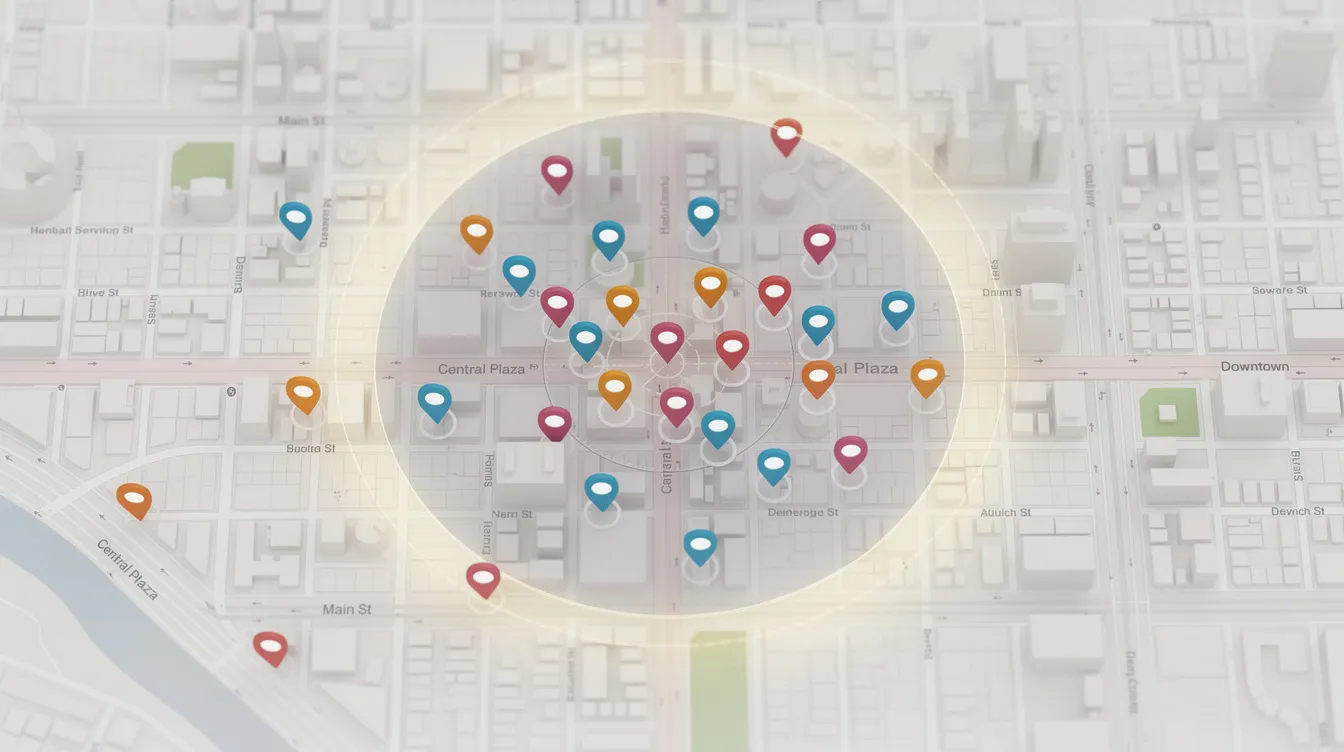
Factor in proximity and device location. If the searcher is far from your exact location, your listing may not appear in the visible Map Pack even if it ranks well for searches conducted near your address. To diagnose this accurately, use GeoGrid-style mapping tools that simulate searches from multiple points across your local area.
If all of these fast checks look clean and your business still isn't showing, the root cause is almost certainly deeper local SEO: weak relevance, insufficient prominence, or competitive pressure. The next sections explain how Google makes those decisions and the 15 most common reasons your listing fails to meet the bar.
How Google Decides Which Businesses Show in the Google Map Pack
The Google Map Pack - also called the local 3-pack - is the set of three highlighted google maps results that appear above organic listings when someone performs a search with local intent, such as "emergency plumber near me" or "family dentist Dallas." Businesses in the Top 3 Google Maps positions receive 3x more leads than those that appear further down the list, making the Map Pack the single most valuable piece of real estate in local search.
Organic SEO vs. Google Maps Rankings
Organic search engine optimization and google maps seo are related but distinct. Organic rankings depend heavily on website content, domain authority, backlinks, and on page signals. Google maps ranking, on the other hand, is driven primarily by your google business profile data combined with three core local ranking factors: relevance, distance, and prominence. A business can rank well organically but be absent from the Map Pack - and vice versa. Winning both requires attention to your website and your profile. For example, local seo contractors use their office address
The Three Core Ranking Factors
Google prioritizes proximity, relevance, and prominence in local search rankings. Every situation where a google business profile is not showing up traces back to one or more of these three signals being too weak.
Relevance measures how well your business profile matches what the searcher typed. This is where your primary category, secondary categories, listed services, products, business description, and Q&A content matter most. If someone searches "AC repair" but your primary category is set to "HVAC contractor" and you have no services or products listed for AC repair specifically, Google may not consider you relevant enough. Competitor research is valuable here: look at what categories and services the top three Map Pack results are using, then ensure yours are at least as specific and accurate.
Distance refers to how close your business is to the searcher's device location or the city they typed into the search bar. For queries like "dentist Austin," Google uses the geographic center of Austin as a reference point. A dental office downtown will appear more frequently for that query than one 15 miles outside the city center, even if both profiles are equally optimized. This is a physics problem that SEO cannot fully overcome, but strong relevance and prominence signals can extend your visible radius.
Prominence is the trust and popularity layer. Key signals include total and recent review count, average rating, review velocity, citation volume and consistency, website authority, local backlinks, branded searches, and user behavior metrics like click-through rates, phone calls, and direction requests. Positive online reviews are the second most important ranking factor for the local pack, right behind your primary category. A business with 200 recent google reviews and a 4.7-star average will almost always outrank one with 12 reviews and a 3.9 rating, all else being equal.
Business Types Matter
Service-area businesses (plumbers, electricians, mobile pet groomers) and storefronts (restaurants, dental offices, retailers) are treated differently. Storefronts display their physical address and benefit from proximity to every nearby searcher. SABs hide their address and define a service area, which means they rely more heavily on relevance and prominence to appear in the local pack. Google caps service areas at roughly a two-hour driving distance, so setting your coverage to an entire state will hurt rather than help.
AI Search and 2026 Trends
While Google's AI Overviews and generative features are beginning to surface local results in new ways, the classic Map Pack and google maps app remain the primary drivers of local phone calls and store visit activity. 82% of people use their phones for "near me" searches on mobile devices, and those searches still overwhelmingly land on the Map Pack. That said, content quality, semantic clarity, and structured data are becoming more important as Google deploys AI tools like Gemini to evaluate listings and filter spam.
Local Ranking Coach uses GeoGrid-style mapping, semantic SEO, and Answer Engine Optimization (AEO) to strengthen all three ranking factors across both traditional Map Pack results and emerging AI search surfaces - ensuring local customers can find your business regardless of how they search.
Section summary: The Map Pack is controlled by relevance, distance, and prominence. Your primary category, reviews, citations, website authority, and proximity to the searcher are the levers you can pull. If any of these are weak, your google business profile won't show up where it matters.
15 Reasons Your Google Business Profile Is Not Showing in Google Maps (And How to Fix Each One)
This is the core troubleshooting list. These 15 reasons cover every major failure point that causes a local business to disappear or underperform in google maps and the local pack. Each includes the trigger, the fix, and a realistic timeline.
1. Your Google Business Profile Isn't Fully Optimized
Incomplete business information can reduce visibility in search results - and it happens more often than you'd think. Missing secondary categories, empty services and products sections, a blank business description, outdated business hours, and zero business attributes all reduce your relevance and prominence signals. Businesses with complete profiles rank higher in local searches. Google prioritizes businesses with accurate hours of operation because incorrect hours frustrate users and generate negative engagement signals.
Fix: Fill out every single field. Write a detailed business description using relevant keywords. Add all applicable services and products. Set accurate hours, including holiday and special hours. Add attributes (wheelchair accessibility, women-owned, veteran-owned, etc.). This alone can produce noticeable ranking improvements within one to two weeks.
2. Your Primary Category Is Incorrect
Your primary category is the #1 ranking factor for Google Maps. Choosing "Marketing consultant" instead of "SEO agency," or "General contractor" instead of "Roofing contractor," can bury your listing for the exact searches you need to win. Google uses your primary category as the strongest relevance signal when matching your business to a search query.
Fix: Search your main service + city in google search and note the primary categories that the top three Map Pack businesses use. Select the most specific, accurate primary category available. Add relevant secondary categories to broaden your reach. Be aware that changing your category can trigger a temporary re-evaluation period - profiles may undergo review after significant edits, impacting visibility temporarily - but the long-term gain is worth it.
3. Your Address or Service Area Is Ineligible or Unclear
Using a P.O. box, virtual office without permanent staffing, or a co-working desk as your business listing address violates Google's guidelines and frequently triggers suspension. For service-area businesses, defining coverage that spans entire states or unrealistically large regions dilutes your distance signal and invites policy flags.
Fix: If you have a legitimate physical address where you serve customers, use it and display it. If you are a service-area business, hide your address and define a realistic service area (typically within a two-hour driving radius). If you've been using a virtual office, either staff it during stated hours with proper signage or switch to a compliant address. Violations here are one of the top reasons for hard suspensions.
4. Your Listing Is Suspended or Disabled
Suspended profiles will not appear in search results, full stop. Common triggers in 2024–2026 include keyword-stuffed business names (e.g., "Joe's Plumbing | Best Emergency Plumber Dallas TX"), fake locations, and repeated policy violations. Google's AI-driven enforcement has become significantly more aggressive - in 2024 alone, Google removed over 240 million policy-violating reviews and blocked over 70 million suspicious listing edits.
Fix: Check your Google Business Profile Manager dashboard for suspension notices. If suspended, you will need to submit a reinstatement request with evidence: utility bills proving your address, business licenses, photos of signage and storefront. Reinstatement typically takes one to four weeks depending on severity.
5. Duplicate Google Business Profiles
Multiple listings for the same physical address or brand can split authority and cause one or more to be filtered out by Google. Duplicate listings often arise when a previous owner or a marketing agency created a second profile, or when Google auto-generated a listing from web data.
Fix: Search for your business name and address variations in google maps to find duplicates. Claim any unclaimed duplicates, then request a merge or removal through Google Business Profile Manager. Consolidate reviews into a single, canonical listing. If two listings share the same address and business name, Google will eventually filter one - make sure the one that survives is the one you control.
6. Weak or Inconsistent NAP Citations
Local citations are mentions of your business's NAP online - your name, address, and phone number appearing across directories, data aggregators, and industry sites. Businesses with consistent NAP data are 40% more likely to appear in the local pack. Consistent NAP data increases local search visibility by 40%, while inconsistencies across Yelp, Apple Maps, Bing Places, Facebook, BBB, yahoo local, and industry specific directories erode Google's confidence in your business information. Citations help establish trust and authority for local businesses, and quality citations improve your ranking in the local pack. Citations are critical for local businesses to appear in search results.
Fix: Conduct a citation audit across all major local directories and data aggregators. Correct every mismatch: exact business name spelling, current phone number, current address with suite or unit numbers. This is tedious work but essential. Expect to see prominence improvements over two to three months as search engines reindex the corrected data.
7. Too Few or Weak Google Reviews
Businesses with more positive reviews rank higher on Google Maps. Positive reviews are a direct ranking factor for local search. Yet many businesses are stuck under 10–20 reviews while competitors in the same market have 100+ recent reviews with strong ratings. Review quantity, average rating, recency, and review velocity (a steady stream vs. sudden spikes) all matter. Businesses with consistent reviews see improved online trust, and responding to reviews encourages more customer feedback.
Fix: Build a systematic review generation process. Ask customers for reviews via email, SMS, or printed cards at the point of service. Respond to every review - positive reviews and negative reviews alike - within 24–48 hours. Avoid buying fake reviews; Google's AI systems are increasingly effective at detecting and removing them. How many reviews you need depends on your market, but aim to match or exceed the review count of the top three Map Pack competitors in your area. More reviews, earned consistently over time, will move the needle.
8. Your Website Lacks Local SEO Signals
Your website directly influences your google maps ranking. Missing city pages, missing service pages, thin content, no embedded Google map, and no LocalBusiness schema markup all weaken the connection between your website and your business profile. Without strong on page signals, Google struggles to confirm that your business is genuinely relevant to local searches in your area.
Fix: Build dedicated service pages for each core offering (e.g., "Residential Roof Repair in Phoenix" rather than a single generic "Services" page). Create city-specific landing pages if you serve multiple locations. Add LocalBusiness and Service schema markup. Embed a Google map showing your exact location. Ensure your website's NAP matches your google business profile exactly. These organic traffic improvements typically compound over three to six months.
9. Your Website and Google Business Profile Don't Match
When Google sees different services listed on your website than on your profile, a different phone number, a different physical address, or outdated branding on one but not the other, it weakens the "entity" connection. Google can't confidently confirm that the website and the business listing represent the same business, which dampens local rankings.
Fix: Audit both your website and your google business profile side by side. Match every service, every phone number, every address, every service area description. If you recently rebranded, update both simultaneously. Consistency is the foundation of trust in local seo.
10. Low Domain Authority and Few Local Backlinks
A brand-new domain or a website with almost no backlinks from authoritative local sources will rank behind established competitors who have earned links from chambers of commerce, community organizations, local news outlets, and industry associations. Domain authority is a prominence signal that Google uses alongside reviews and citations.
Fix: Begin targeted local link building. Join your local chamber of commerce. Sponsor community events or local events. Seek mentions in local news. Partner with complementary businesses for cross-linking. Contribute guest posts to industry associations. Backlink acquisition is a slow process - expect meaningful impact over three to six months - but it compounds powerfully over time.
11. Little or No Local Content
Without content tied to the places you serve, Google struggles to assign geographic relevance to your business profile. If your website has no blog posts, no neighborhood pages, no case studies mentioning real locations and dates, and no FAQ content targeting "near me" or city-modified local keywords, you are leaving relevance signals on the table.
Fix: Publish neighborhood pages, city-specific service area pages, and blog posts about local projects or case studies. Write FAQ content targeting relevant searches with local intent - for example, "How much does a roof replacement cost in Dallas?" or "What to do during a plumbing emergency in Scottsdale." This kind of content helps local customers find your business for the exact queries that matter.
12. Low Activity on Your Google Business Profile
A stale, neglected profile sends a negative freshness signal. Rarely uploading photos, never publishing google posts, ignoring Q&A, and having no product or offer updates tells Google (and potential customers) that this business may not be actively operating. Uploading 20-30 high-quality photos improves your listing's appeal and engagement. Active profiles consistently outperform dormant ones.
Fix: Schedule weekly google posts highlighting recent projects, offers, or tips. Upload new photos monthly - real photos of your work, your team, your location. Answer every question in Q&A. Add seasonal offers and updated products. This level of activity signals to search engines that your business is alive, engaged, and worth recommending.

13. You're Targeting Too Large of an Area Too Soon
Trying to rank across an entire metro area or multiple locations with a single weak listing almost always fails. The distance factor works against you for searches far from your physical address, and spreading your service area too thin dilutes your local search presence.
Fix: Focus first on dominating the immediate local area around your physical address. Build reviews, citations, and content anchored to that core geography. Once you own that territory, expand outward with additional city-specific content, local backlinks, and (if eligible) additional local listings at legitimate secondary locations. Businesses that serve customers across a wide region should still prioritize depth before breadth.
14. Stronger Nearby Competitors
Sometimes the reason your business isn't in the Map Pack is simply that three other businesses have more reviews, stronger websites, more citations, better content, and longer track records. Established competitors with years of accumulated prominence signals occupy the local pack and won't be displaced overnight.
Fix: Conduct a competitor gap analysis. Compare your review count and average rating, citation volume and consistency, website content depth, domain authority, and social media channels activity against the businesses currently in the Map Pack. Identify the biggest gaps and prioritize closing them. You won't outrank a 10-year competitor with 500 reviews in 30 days, but incremental improvements accumulate. Many businesses see meaningful ranking improvements within 90 days of starting a structured local SEO campaign.
15. Algorithm Updates and Filters
Major local algorithm updates - including the "Vicinity"-style updates that rolled through 2024–2026 - can temporarily reshuffle local pack rankings and filter local listings that are too similar, clustered at the same address, or triggering spam signals. Profiles may undergo review after significant edits, impacting visibility temporarily.
Fix: Don't panic. Monitor your rankings over 30–60 days after any noticeable drop. Check for recent edits that might have triggered a review. Verify that your NAP, categories, and content are compliant. Strengthen your core signals (reviews, citations, website content) rather than making drastic changes. Algorithm recovery typically takes four to twelve weeks for compliant businesses.
Local Ranking Coach uses a structured audit covering all 15 of these failure points, then builds a prioritized 90-day roadmap to restore and grow Map Pack and google maps visibility. Every engagement starts with data - not guesses.
How Local Ranking Coach Fixes "Not Showing Up" Problems in Google Maps & The Map Pack
Local Ranking Coach is a veteran-owned local seo agency founded in 2005 with over 22 years of experience specializing in getting local businesses into the Top 3 Map Pack and improving online visibility across both traditional search and AI-powered search experiences.
Google Business Profile Audit & Repair. Every engagement begins with a line-by-line profile audit: categories, business description, services, products, photos, Q&A, attributes, and business hours. The team checks for hidden suspensions, duplicate listings, and policy risks. This is often where the root cause of a "google business profile not showing" problem is uncovered.
Citation Cleanup & NAP Synchronization. Local Ranking Coach reviews and corrects business information on Yelp, Apple Maps, Bing Places, Facebook, BBB, industry specific directories, and major data aggregators. Every mention is aligned to identical name, address, and phone data, supporting both local seo and AI search understanding.
Local Website Optimization & Semantic SEO. The team builds or improves service pages, city pages, FAQs, and schema markup (LocalBusiness, Service, FAQPage) to align the website with the google business profile and boost both organic and local pack rankings. On page signals are treated as a direct extension of your profile, not a separate project.
Review Growth & Reputation Strategy. Ethical, systematic review generation via email and SMS follow-ups, printed cards, and on-site prompts. Local Ranking Coach coaches business owners on how to respond to online reviews - both positive and negative - to increase conversions, build trust, and strengthen prominence. Businesses with more positive reviews rank higher, and this strategy ensures a steady, natural review velocity.
Local Authority & Backlink Building. Targeted outreach to chambers of commerce, community organizations, local sponsorships, local news outlets, and industry associations builds high-quality local backlinks that strengthen prominence and drive referral traffic.
AEO (Answer Engine Optimization) & GEO (Generative Engine Optimization). Content is formatted for AI Overviews, ChatGPT, Gemini, Perplexity, Copilot, Claude, and Grok with clear entity relationships and question–answer structures. This ensures AI systems choose and cite the business more often when answering queries with local intent.
Ongoing Monitoring & Map Pack Tracking. Regular tracking of Map Pack positions, google maps ranking across a GeoGrid, profile views, phone calls, direction requests, and website clicks - with monthly reporting tied to real business outcomes, not vanity metrics. 40% of local SEO campaigns generate an ROI of 500% or more, and Local Ranking Coach's reporting framework ensures you see exactly where that return is coming from.
Ready to find out exactly why your google business profile is not showing up? Request a free Google Maps SEO audit from Local Ranking Coach and get a step-by-step recovery plan built around your market, your competitors, and your growth goals.
Signs Your Local Business Visibility in Google Maps Is Improving
Once fixes are implemented, you need concrete metrics - not gut feelings - to know whether your search visibility and local visibility are actually improving in Maps and the local pack.
More profile views in Google Business insights. Rising "Views on Search" and "Views on Maps" over a 30–90 day period is a strong early signal that your local search visibility is recovering. Track these numbers weekly.
Increases in phone calls and direction requests. These are high-intent actions taken directly inside google maps. Compare your current 30-day totals to previous periods. If calls and direction requests are climbing, your listing is reaching more local customers.
More website clicks from the profile. Add UTM parameters to the "Website" button in your google business profile so you can track visits from google maps directly in your analytics tools and tie them to leads and conversions.
Higher rankings for key local keywords. Use rank tracking or GeoGrid-based tools to monitor progress for target phrases like "plumber in Phoenix," "family dentist Dallas," or "roof repair near me." Watch for movement from "View all" results into the top three local results.
Growth in online reviews and engagement. More 4–5 star reviews, more review responses, and more Q&A activity usually correlate directly with higher prominence in relevant searches. This is both a leading indicator and a driver of further improvement.
Better engagement signals. Rising click-through rates from the Map Pack, more photo views, and longer on-site engagement time are positive behavioral signals that reinforce local rankings over time.
Improvements usually appear gradually over 4–12 weeks. Consistency is what separates businesses that climb into the Map Pack and stay there from those that see a brief bump and then fade. Local SEO is not a one-time project - it's an ongoing competitive advantage.
Frequently Asked Questions
These FAQs address the practical questions small business owners ask most often after learning why their google business profile is not showing in google maps or the local pack.
How long does it take for a new Google Business Profile to start showing in Google Maps?
A newly verified profile typically begins appearing for brand-name searches within a few days, but ranking for non-brand discovery queries - the ones that actually drive new leads - usually takes 2–8 weeks. The timeline depends on competition in your market, how complete your profile is, and how quickly you accumulate reviews and activity. If nothing changes after 60–90 days despite a fully optimized profile, it's time to look deeper at website authority, citation consistency, and competitive gaps. 46% of Google searches have local intent, so the opportunity cost of waiting without action is significant.
Can I rank in the Map Pack without a physical address that customers can visit?
Yes, but with caveats. Google allows service-area businesses to hide their physical address and define the geographic areas they serve customers in. However, SABs often face a harder path to Map Pack visibility because they lose some of the proximity advantage that storefronts enjoy. Ranking across a very large service area with a single profile is difficult. Your best strategy is to combine a well-optimized profile with strong website content, local citations, and reviews that mention the specific cities and neighborhoods you serve.
Does running Google Ads make my free Google Business Profile rank higher?
No. Google ads do not directly improve organic or Maps rankings. Paid ads and organic local results operate on entirely separate systems. However, running google ads can increase overall business visibility and brand awareness while long-term local seo work builds momentum. Think of ads as a short-term bridge, not a substitute for the foundational work that drives sustainable local pack rankings.
What if my business suddenly disappeared from the Map Pack after an update?
Don't overreact. First, check your Google Business Profile Manager dashboard for any suspension notices or pending reviews. Then check whether you made recent edits (name, category, address) that could have triggered a re-evaluation. Verify that your NAP is still consistent across your website and major local directories. If everything checks out, the drop may be algorithmic - Google periodically reshuffles local results, and compliant businesses usually recover within 30–60 days if their core signals are strong.
Can Local Ranking Coach help if another agency already worked on my Google Business Profile?
Absolutely. Many clients come to Local Ranking Coach after working with a previous provider who either made mistakes (keyword-stuffed names, low-quality citations, neglected reviews) or simply didn't deliver results. Local Ranking Coach performs an independent audit, keeps what works, fixes what doesn't, and focuses on measurable improvements in phone calls, direction requests, and qualified leads - not vanity metrics. With 22+ years of experience and a focus on ethical, long-term search engine optimization, the team knows how to diagnose problems other agencies miss and build a strategy that actually moves the needle for local business visibility.
Conclusion
The Google Map Pack is the highest-converting real estate in local search. When your business appears in those top three positions, you receive dramatically more phone calls, direction requests, and qualified leads than businesses buried below. When your google business profile is not showing up, every day of inaction is a day your competitors are capturing the local customers who should be finding you.
The fix is almost always within your control. Success requires more than just creating a profile - it demands a strong, locally optimized responsive website, consistent business information across every directory, authoritative local content, quality local backlinks, and an active reputation strategy built on authentic online reviews.
By combining semantic SEO, AEO, and GEO strategies, businesses can dominate local search across google search, google maps, AI Overviews, and leading AI platforms like ChatGPT, Gemini, and Perplexity. The businesses that invest in this multi-surface approach now will own their local market for years to come.
Stop losing leads to competitors who simply optimized what you haven't. Contact Local Ranking Coach today for a comprehensive Google Maps SEO audit and a customized strategy to increase your local search presence, generate more qualified leads, and grow revenue. Your Map Pack visibility starts with a single step - take it now.